Monday, 23 October 2017

Math Part 2- Post #6: The End?? Nay!

Retrieved from farwellcards
And so we have reached my final weekly post! Overall, I have been very pleased with my progress in the battle against my negative math mindset! I feared that I had done such a good job making my posts so positive and hopeful this year that I may not have created an accurate picture of how deeply anxious math makes me. But then I went back and looked at my posts from last year and decided that I had made my feelings towards math very clear through the tone of my posts. 

Looking back at my posts from last year, and even the beginning of this year, gave me the idea to revisit my two goals for this course that I outlined in my very first post and see how I did. A little self assessment, a selfsessment if you will. 


1) Giving myself the time I need to fully understand a concept so I can explain it well.

Surprisingly, there was little opportunity for me to build this skill in the face to face class, we generally spent our time working through strategies or exploring resources, but I did reflect on this skill a lot in our weekly forum posts. Here are some strategies I picked up:


Related image
Retrieved from quotebook.com

The power of five minutes- Five minutes seems like SUCH a long time when you are working through a math question in your head, especially if others are figuring things out in two or less. But take the five minutes, or at least take more time than you normally would, for me that's five minutes but I don't know what it is for you! I will be the first to admit its not a great feeling, it's kind of like how you feel in the middle of a long run, you may initially question your capacity for sane judgement and have the urge to just run the next 2 km, but you will burn out or get lost in some weird side street and have to take the long way home. Point being, I have been giving myself more processing time and it has REALLY helped me actually think through problems and freak out less. 

Ask a homie - Even it may feel weird to do, ask someone who you feel comfortable with to explain a concept to you. There are two major benefits to this: one, you may understand the concept better (you also might not, sometimes you have to find the right homie!)  and two, you now have a new way to explain that concept which may come in handy when relaying that information to someone else. 


2) Asking for help even when I feel that I might be judged for it 

I can safely give myself a 10/10 for this one because this year I've made a pact with myself that I would work even harder than last year and ask more questions. And so far I've stayed true to that promise, at some cost to my pride. Last year I came to know my weakness and strengths as a teacher and one of my great weaknesses was not asking for help for things that I thought I ought to already know. I had been consumed by the idea that asking for direction and guidance could be seen as a lack of drive and instinct. I know that I can seem young and even silly at times because of my Bernadette-ness, and I was worried that asking simple questions might reinforce that image. My wonderful associate teacher greatly lessened that fear for me through her kind and patient guidance and I've tried my best to keep helping myself grow in this way. Math is such a big area where I have been so disinclined to ask for help and I feel I've made steps towards shrinking that fear. 


I am really going to be calling on these skills during my placement this fall which is in a Grade 8 class! 

Am I nervous? OF COURSE. Goodness of course I am. 

But this is just the challenge I've been praying for, and so I will go forth and fear no darkness because I know I have more growing do to!


Monday, 16 October 2017

Math Blog Part 2 - Post #5: "Mathemagical" Resources from a Wonderful PD


A few weeks ago my fellow teacher candidates and I attended a PD called Mathemagical Ideas led by Cathy Chaput and it was SO GREAT.


So practical! So engaging! So many resources! 10/10 Bernadettes would recommend. 

I am very excited to share the resources I gathered from this PD so get ready for....

Resource Round-up!

Educational Books 

Cathy mentioned many educational books, but I wanted to highlight these two because I found them particularly interesting.

One is a Snail, Ten is a Crab by April Pulley Sayre and Jeff Sayre

Image result for One is a Snail, Ten is a Crab by April Pulley Sayre and Jeff Sayre
Retrieved from walkerbooks.com

This book uses the number of legs a creature has to demonstrate how different combinations of steps can combine to make a certain number. For example a human is two, because we have two feet, and a crab is 10, so 30 could be three crabs or ten people and two crabs. This book could be introduced in any elementary grade depending on how it is used because it activates number sense skills. (Plus how cute is the illustration??) 

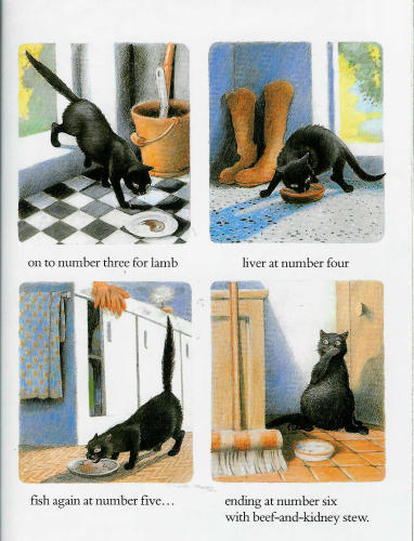
Six-Dinner Sid by Inga Moore

Retrieved from weebly.com
Six Dinner Sid is a great math resource that teachers wouldn't necessarily hear about because there is actually no specific mathematical focus in this book, it's simply a fun story about a very naughty cat. Sid has six different owners who all think he is their cat, which eventually lands him in trouble when he gets sick and is brought into the vet six different times. There are several connections that can be made from this story, and you can flexible about the level of entry. A teacher could ask questions that are directly mathematical: if Sid has six owners how many meals does he get a day if each owner feeds him three times? Or questions that are more hypothetical: If Sid gets one meal from one owner each day but moves to a new street that has four houses, how many meals is he getting now? Can we estimate?


Educational Websites 

Again, many resources were shared, but I would like to focus on these two in particular!

https://www.youcubed.org - Jo Boaler website

We've been watching a lot of Jo Boaler videos for our math modules so I thought it would be useful to explore the website connected to her research. Boaler focuses on math mindsets, particularly how we as educators can fight the negative mindsets that often come with math and the website has many videos and resources specifically directed towards educators. 

https://gfletchy.com Three-Act Lessons, Cookie Monster Video

Graham Fletcher has a bunch of these Three-Act Lesson videos where students can employ various math skills (in this video it is estimation) in fun life-based situations. 


After watching this first video the students are given this picture:


Retrieved from gfletchy.com
How many cookies did the Cookie Monster eat?? 

Estimate.

What is a number that is too high? Too low? 

These kinds of little activities are very open and moldable. Students could work on the question on their own or in groups depending on the needs of your classroom and the website provides possible modifications for different levels of readiness. 

It feels good to have concrete resources to share and I hope to continue to fill my blog with them!

Only one more week of math blogs! It's strange how quickly the time has gone by, and how thoroughly I have enjoyed the process! But, stranger things have happened! 

(on another note, VERY much excited for Season 2 of Stranger Things !!! ) 

Until next week, 

"Forth and fear no darkness"

Bernadette 


Monday, 2 October 2017

Math Blog Part 2 - Post #4: Webinar Worries: A Cautionary Tale


Well, we presented our webinar today. Though we were both nervous I think we were able to convey our information accurately and we were blessed with very active and ready participants.

But I still have many worries, and I will tell you why.

Several times during these blogs I have mentioned the benefits of using digital tools, and I still stand by what I said. Digitizing math gives students access to websites, games, and resources that allow them to build their problem solving skills in engaging ways and I have personally seen how much students enjoy the opportunity to work with digital tools. But let me share with you a cautionary tale.


Retrieved from makeameme.org


I was extremely stressed to work with Youtube livestreams because its a platform I am unfamiliar with, but we were given instructions to follow and I knew my fellow teacher candidates would help me in any way they could. So my partner and I created a test webinar link and every seemed to be ready for the big day. And yet, the day of the webinar came and brought many unexpected challenges. We had to resend links and worry about the quality of the internet, the lag time, the possibility that one of our observers would choke on a pizza crust and have to miss our webinar because they were rushed to the professional pizza uncloggers like in the dream I had last night.

You know, normal worries.

But at the end of the day our webinar "Differentiated Instruction: Universal Design for Awesomeness" was complete without a single pizza related incident and we were able to share our resources and knowledge with our fellow classmates using a new platform that we might not have otherwise used, so I have to admit there is some good in that.

My word of caution to you, dear blog buddy, is that when you feel nervous about working with new technology make sure you make use of all the resources available to you to get acquainted with it. Because, as great of a resource as it is, technology is as fickle as the weather we have been having so it's always best to be prepared!

Retrieved from http://now-here-this.timeout.com

Resource Round-up

Lastly, speaking of resources, I'd like to share some of ours here! The first link DI Resources goes to a page on Edutopia, an educational company created by George Lucas (yes that George Lucas), and there are over 20 resources gathered on that link alone that deal with Universal Design for Learning in several different contexts. The second is an EduGains document that focuses on differentiation for intermediate/senior students specifically, it even goes up university level!

Hopefully these are of some help!

Speaking of help, remember to ask for it when you need it! I didn't as much as I could have this week and I am kicking myself for it.

This week has been a difficult one but I have learned a few lessons I sorely needed reminding of and I am glad for it. So until next time:

"Forth and fear no darkness"

Bernadette


Monday, 25 September 2017

Math Blog Part 2- Post #3: Webinar Winnings!

It was Webinar day today! All three webinar groups successfully communicated their topics with ease and skill, which made me very hopeful for mine next week! Technology always makes things a little risky I find, its so temperamental! But I was able to gather some great resources and strategies from these webinars which are aiding me in my Put-it-into-Practice Bob Ross quest!

Webinar #1 -  Cathy Fostnot Theories 

Many of us used "Math Strings" in our placements but it had been a while since I had seen it in action and I needed some reminding so I watched the webinar even though it wasn't technically mandatory - and I was glad I did! We went through a series of mental math problems and shared our strategies after each and felt so good to share the weird way I had worked through the problem in my head and have it validated by the leaders. I often use the method of turning uneven of difficult numbers, for me that might mean a number I can't easily add or subtract in my head, and change it to a "friendly" number, aka numbers I am more comfortable with (even numbers, multiples of five) and then adding in the difference at the end. I always had this feeling like that wasn't quite the way I should be doing things but today my method was not only accepted, it was praised for its originality!


  Webinar #2 - Creating a Safe Classroom Environment/Using Digital Tools 

In my past blogs I've spent quite a lot of time stressing the importance of a safe and accepting classroom environment so I decided to focus on the use of digital tools in this webinar because I picked up quite a few new resources! I will list them here with brief descriptions below!

Resource Round-up


A simple website which features tiles such as the one pictured below where students can be asked to find which one doesn't belong. As you can see there is no correct answer, there are many different ways the students could interpret it, which allows for creative thought and fun inquiry!


Which one do you think doesn't belong?


This website gives real world examples for students to use to work on their estimation skills. They could even argue their point of view with their fellow classmates, something WODB also allows the students to do!


Similar to Fun Brain from the days of yore, Math Playground offers a multitude of games focused on different strands and topics (fractions, measurement, geometry etc.). I suggest trying Red Brick, it is extremely addictive and my little sister is an absolute pro at it!

Well that's all for this week friends! 

Tune in next week to hear about the fate of my Webinar! 

Until then,

"Forth and fear no darkness"

Bernadette 

Monday, 18 September 2017

Math Blog Part 2 - Post #2: A Happy Little Accident

Another week and another class have gone by. 

Well, thoughts thoughts thoughts- I have many! 

I'm certain I won't be the only member of my class to discuss the opening card trick because, well, it was rough waters to say the least. I know that was not the most eloquent way I could have framed that feeling (I can almost hear my beloved high school English teacher shaking her head at me) but it was a bit of a culture shock moment for our class as future teachers and I found myself feeling quite frazzled thinking about it and it seems my awkward syntax reflected my mixed feelings about the whole experience.


I am going to quote myself in my response to a fellow teacher candidate who felt the same anxiety and uncertainty that I did during the aftermath (hehhee, Pun Queen strikes again) of the card game because I believe I literally could not say it better myself (okay that was the last one, probably) :

"Yes I think we all felt a lot of frustration at the beginning of class because, and I'm just making an assumption here, for most of us that kind of moment, the "you should know this" moment really hit home, especially since we haven't been in the student position in a long time. But I do think that we should take some comfort in the fact that we made our way through it as a class, we asked questions and supported each other and when our professor realized we were getting a bit too focused on that particular question she reminded us that at the end of the day her goal was to make sure that we would come out of this class with more confidence in math than we came in with. And I think we are making our way, or at least we are in the right mind frame and that's a HUGE step! We always say that we should celebrate little successes with our students but I think we need to also remember to do the same with ourselves!"


Bob Ross. Image. Retrieved from https://quotefancy.com. 

We are making our way! I believe it! Or at least I am very open to believing it! We have been talking about positive mindsets all week and gosh, I want to try to be true to what I say! This coming week is going to be a difficult one for a number of reasons, many assignments are looming and I'm already feeling the weight of this new routine. So I am pulling in the big guns of positivity, Mr. Bob Ross himself. It's my little sister's birthday today and she loves Bob Ross, so I was looking up Bob Ross quotes for her birthday and it turns out that he had a lot of things to say that add to my point! Yes, this quote is maybe a bit over the top but I feel something in it, maybe because I've heard him say the quote and beautiful things often change shape when the words are left to speak for themselves.

But believing, as important as it is, is only half the battle.


The other half is putting it into practice. And I will share a personal story and another Bob Ross quote to demonstrate to you, dear reader, how I am putting my positive attitude into practice.

I was helping my mom sign up for Remind so my little sister could receive the extra credit math assignments her teacher was posting to the site and my mom showed me the math problem the teacher had given:


My Mother and I both initially had a negative reaction to this vague problem. Is there a formula they are meant to follow? What a silly question, what is the point of this etc. But then I made the effort to look at it as an educator asking: why would a teacher assign a question like this? Would I use this? And I actually ending up deciding that I would, but in a very different setting. I see the question as an opportunity for students to work on their "making sense" and problem solving skills. Before I would hand it out I would preface it saying that we are using this question to warm up our brains by thinking through a problem that will take some patience and effort. I would probably allow the students to work alone or with partners and encourage discussion. Then we would gather again as a class however many minutes later and discuss how we worked our way through it.

Just like that I had rejected my instinct to shut down and I reflected on the merit of a math question as an educator. I call that a start, and a promising one at that!


Bob Ross. Image. Retrieved from https://quotefancy.com

Resource Round-up
Guide to Effective Instruction in Math - A great resource for teaching math from Grade 1 to 6.

Until next time!

Forth and fear no darkness

Bernadette


Monday, 11 September 2017

Math Blog Part 2 - Post #1: A New Year Dawns

I have returned for Part Two of "Bernadette vs Math: The Love/Hate Battle of the Century" (its a working title, I may decide on something even more dramatic) and this year my goal is to work on the list of needed improvements I created for myself in my last blog post last year. To save you from scrolling to find it, some of the biggest problems I encountered were:

1) Giving myself the time I need to fully understand a concept so I can explain it well
When everyone else is nodding at the professor and speeding through their work its easy to feel like you have to go with the flow and figure it out on your own later. I did that a couple times last year until I felt comfortable enough to know when a concept was giving me a hard time and to focus more energy on it.


2) Asking for help even when I feel that I might be judged for it 
Throughout all my years of schooling I had several math teachers who claimed that no matter what the question was or how silly it may feel, that we could always ask them for help and they would kindly explain it again, or spend some time helping us. And though some teachers followed through on this promise and created a classroom environment where I could have felt safe enough to come forward when I had a problem, (if my tremendous fear of being ridiculed for my lack of basic math skills that possessed my entire being hadn't stopped me from taking that chance) there were enough teachers that didn't keep that promise that I still find it difficult to trust when a professor makes that same statement. But I am getting better at trusting myself and asking what I need to ask regardless of what the reaction might be.


Week 1 Reflection

I appreciate the continued existence of the forum posts, even though they felt a little tedious at times last year, it forced me to look through all the posts and there was always something new and interesting to learn about my fellow teacher candidates.

I also think it is very important to note that we began class by smashing stereotypes and negative attitudes, we need to be aware of the way we present math as educators because half of the battle of fighting math myths is being aware of the damaging connotations of seemingly harmless phrases like "this is a simple concept" or "this is an easy unit". Students hear that and assume something is wrong if they aren't finding the concept to be simple, which starts (or perhaps feeds) a chain of negative feelings towards math of any kind.

I am excited and, I'm not ashamed to admit, quite nervous about the challenges teaching math will bring and I am ready to work hard on my goals!

Until next week,

"Forth and fear no darkness"


Bernadette

Thursday, 1 December 2016

Math Blog # 12: Forth and Fear No Darkness

I have learned so much in these short weeks. Amongst all the strategies and lessons and examples I realized that I had lost something that I came in with. I had lost my fear. Yes math still makes me nervous and yes, sometimes I have nightmares about being the one person in class who doesn’t understand a math concept and every laughs at me and then they all turn into pineapples. The point is, I never ever thought I could be excited to go to a math class- scratch that- I never thought I would voluntarily ever take another math class again, let alone teach one! And yet here I stand! (or more truthfully, here I sit because I am not talented or fit enough to type standing up). I still have so many questions and so much to learn but at least I know that I can continue from this point armed with the resources and knowledge I have been given by my professor and my peers. In the spirit of truthfulness and hope, I wanted to make a list of things I’ve learned and ways I still need to grow. Perhaps someone out there might match with at least one thing on my list. In the end, this is more for me than anything else. I wanted to literally spell out where I’ve come from and where I want to go. This blog is not the neatest, smartest or most consistent one out there, but it is truthful. Every week I missed, every mistake I made, every fear I have voiced. This is where I am at. I would say it’s not a terribly good place but maybe I’m on the road to somewhere better. I’m sorry this post is a bit rambly and rough. For an English major I fear I’m really not doing a very good job of summing up my feelings.

Well then. On to the list.
Things I have learned:
Ask questions.
This is for teacher and student. Sometimes you might be struggling to figure out what is in a student’s mind. Ask them. Get them to tell you how they are feeling. On the other side of the teacher friend of mine says that she always tells her students that if they don’t understand something to ask a question. Don’t say “I don’t get it” that doesn’t tell why you don’t understand, what you don’t understand, ask a question and we will figure out the answer together.

Repetition

Once you understand what the class is struggling with, go back or spend more time than you originally intended and address the problem. This doesn`t mean you stop for each little problem, but if you see an error that is becoming a pattern, or if after a test or assignment you see that the majority of students have made the same mistake, pay attention to that. It might mean there is a gap in your teaching, or a gap in their previous knowledge or the concept might be more difficult to grasp than you had supposed it would be.

Cultivate Your Resources

This means knowing your curriculum documents inside out, knowing where to find the best resources for specific subjects, or, if there isn`t much to be found in the usual places, pioneer your own lists. The more you learn, the more you explore, the wider your lens becomes. And if you feel that you have something, a strategy or resource, that you would like to share, you should go for it. If nothing else, you have gathered your thoughts and you have reflected. That is a worthy pursuit.   

Ways I Can Grow

Read and Re-Read my Textbooks

To be honest, I just completely forget some aspects of math because it’s just been so long since I was in contact with them. The Learning Presentations, my textbook and the math refresher course definitely helped me remember a lot of the concepts that were gathering dust in the corners of my mind, but I know I still need a BIG review. I guess it’s a good thing I have several siblings in elementary school who would be more than willing to let me peruse their textbooks.

Getting Organized

This really needs no explanation. I now firmly believe that to be a good teacher you HAVE to be organized. And with math in particular, you need to plan ahead and make sure the lessons and units flow well into each other and figure out what do to when you start to fall behind. This is by far my worst quality as a student, possibly one of my worst qualities as a human. Because I think my lack of organization keeps me from succeeding more than I would like to mention. 

Ask. For. Help.

No matter what you are doing, no matter what problem you are facing. People want to help. And in a school community, there is help everywhere. UTILIZE IT. 

There is so much more I could say, and maybe one day I will. But for now, it is time to move on. In the words of King Theoden: forth and fear no darkness. 

Until we meet again,


Bernadette